.svg)
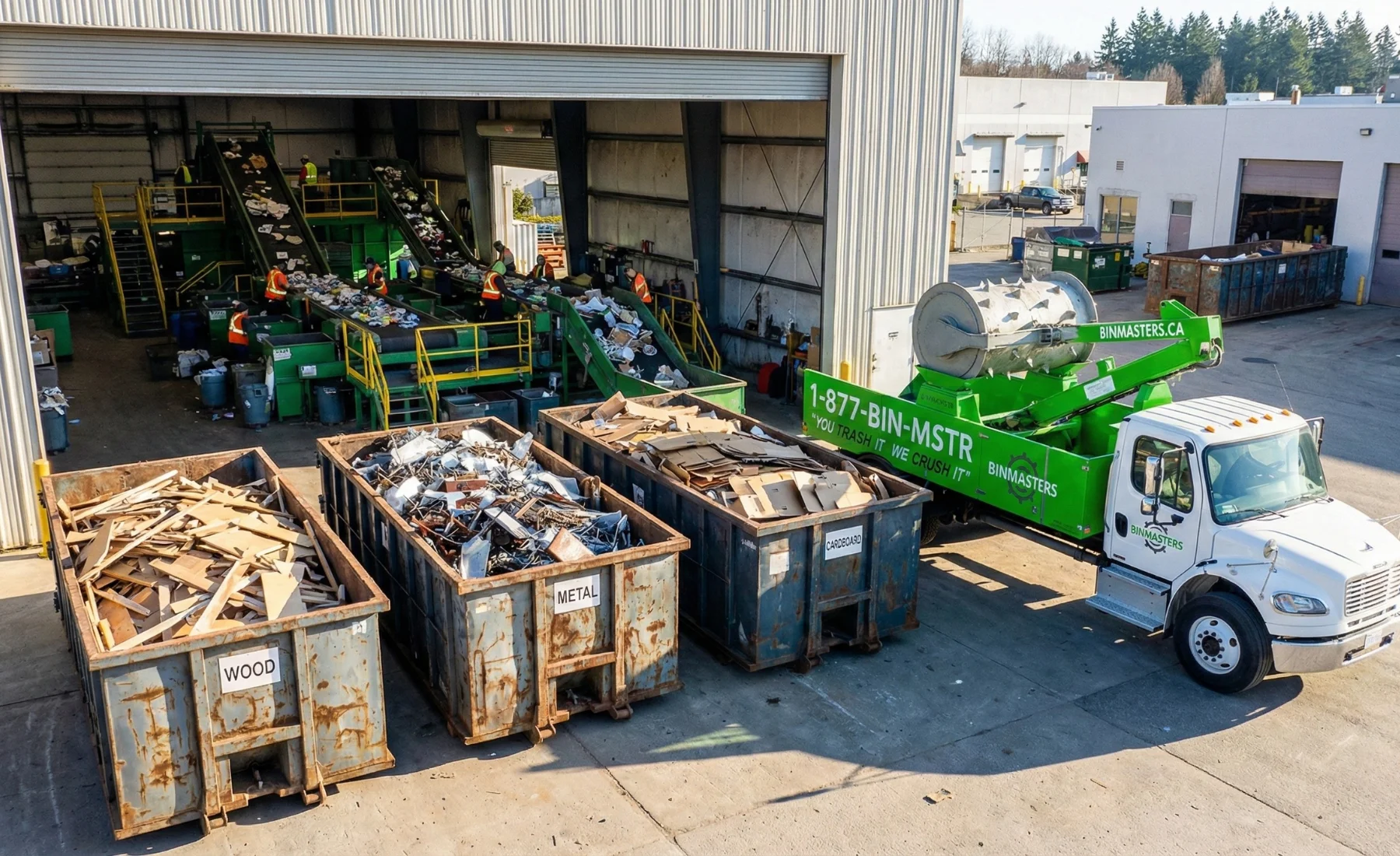
In the world of waste management, the push for greater sustainability and efficiency has never been stronger. As global populations rise and consumption patterns intensify, we are facing an escalating waste crisis. Landfills are rapidly reaching capacity, and the imperative to shift away from the traditional "take-make-dispose" linear model has become a critical global priority. Consequently, businesses and municipalities are under increasing pressure to adopt smarter, more resource-efficient waste handling practices. Pre-compaction sorting represents one of the most effective, forward-thinking strategies to emerge, acting as a crucial enabling step toward a truly circular economy. This process does not just manage waste; it re-categorizes discarded items as valuable feedstock. By ensuring waste is meticulously sorted before its volume is drastically reduced through compaction, organizations can unlock a wealth of benefits, from significantly reduced operational costs and new revenue streams to a substantially smaller environmental footprint.
The Critical Importance of Pre-Compaction Sorting: Preserving Material Quality
Waste compaction has long been a standard practice for reducing the volume of waste, making it easier and cheaper to transport and dispose of. However, this convenience comes at a high environmental and economic cost when dealing with mixed waste streams. Compacting unsorted waste subjects it to intense pressure, which crushes, mixes, and contaminates valuable materials with liquids and fines from other waste types. For example, once dry paper or cardboard is saturated with organic fluids or chemical residue, its fiber integrity is often compromised, making it unsuitable for high-value recycling. Similarly, broken glass fragments can become embedded in plastics or metals, rendering entire bales unsaleable or significantly reducing their market price.
Pre-compaction sorting addresses this fundamental challenge by facilitating the separation of different types of waste at the point of generation or immediately upon collection. This crucial step ensures that materials like cardboard, various grades of plastics (PET, HDPE), metals (ferrous and non-ferrous), and wood remain clean, dry, and distinct. This preservation of material quality is what allows these items to be sold for a premium on the recycling market, fundamentally transforming them from a disposal cost into an asset. High-quality, segregated feedstock is essential for manufacturers who rely on recycled content to meet their sustainability goals and quality specifications.
<According to the U.S. Environmental Protection Agency (EPA), 600 million tons of construction and demolition (C&D) debris were generated in the United States in 2018, with over 455 million tons being directed to next use. This statistic highlights the immense, often untapped, potential for resource recovery when proper sorting and management techniques are applied [1]. While C&D material often lends itself to easier separation, applying the rigorous standards of pre-compaction sorting to the municipal solid waste (MSW) stream can further increase this recovery rate dramatically. This shift is essential for achieving the ambitious goals of a truly closed-loop, circular economy.
Best Practices for Implementing a Robust Pre-Compaction Sorting Program
Successfully implementing a pre-compaction sorting program requires a systematic, comprehensive approach that addresses both the human element and the technological requirements. The following best practices are crucial for maximizing recovery rates and ensuring the long-term viability of the program:
- Conduct a Comprehensive Waste Audit: Before you can effectively sort your waste, you need a precise understanding of your waste stream's composition. A detailed waste audit involves physically characterizing the types, weights, and volumes of materials being discarded over a representative period. This data is the foundation for designing an optimized sorting program, allowing you to prioritize the recovery of the highest-volume or highest-value materials, and to correctly size your sorting infrastructure to your specific needs.
- Provide Clear, Standardized, and Accessible Bins: Effective source separation hinges on simplicity and clarity. Once you know what materials you are targeting, you must provide clearly labeled, color-coded bins for each material type (e.g., blue for paper, yellow for plastics). These containers should be placed in highly convenient, high-traffic locations to encourage and simplify participation from employees, tenants, or residents. Standardizing signage across all locations minimizes confusion and reduces contamination rates.
- Develop Robust Education and Training Initiatives: A successful sorting program depends on the consistent participation and accuracy of every individual involved. It is essential to provide clear, multi-lingual instructions and ongoing training on what materials are accepted and, critically, what constitutes a contaminant (e.g., "wish-cycling" non-recyclable items). Regularly communicating the program's performance, its goals, successes, and diversion statistic, helps to foster a sense of shared responsibility and drive compliance.
- Partner with a Reliable and Experienced Waste Management Provider: The long-term success of the program is tied to your partner's capabilities. Work with a waste management company that has proven expertise in managing segregated material streams and possesses the specialized equipment required for efficient sorting and handling. A strong partner can also leverage their established networks to help you find the most lucrative domestic and international markets for your high-quality recovered materials.
Leveraging Technology for Enhanced Sorting Accuracy
While manual sorting is a key component, modern pre-compaction systems benefit immensely from advanced technology. Integrating smart machinery can dramatically increase both the throughput and the purity of recovered streams:
- Optical Sorters: These systems use near-infrared (NIR) light and high-speed cameras to identify materials based on their chemical composition and automatically separate them with jets of air. Optical sorting is highly effective for separating different types of plastics (e.g., PET from PVC) that are visually similar but chemically distinct, achieving purity rates that are difficult to reach with manual methods alone.
- Mechanical Separation Systems: Screens, trommels, and air classifiers are used to separate materials based on size, shape, and density. For instance, trommel screens rotate to separate smaller, denser items (like glass or soil) from larger, lighter materials (like cardboard).
- AI and Robotics: The future of sorting involves robotic arms powered by Artificial Intelligence (AI). These systems can learn to identify novel or complex items and perform high-speed, repetitive sorting tasks in environments that are unsafe or difficult for human workers, further boosting efficiency and purity.
Optimization through Logistical Integration
Pre-compaction sorting requires a fundamental shift in collection logistics. Instead of a single collection stream, multiple segregated streams must be efficiently managed. This necessitates:
- Fleet Management and Routing: Implementing multi-compartment vehicles or optimized routing schedules to ensure materials collected separately remain segregated during transport to the Material Recovery Facility (MRF).
- Hub-and-Spoke Models: Utilizing smaller, decentralized transfer stations for initial sorting or bulking of single-stream materials before transport to a centralized processing hub. This approach can minimize collection costs and ensure better material quality control close to the source.
The Multifaceted Benefits: Economic Viability and Environmental Stewardship
The benefits of pre-compaction sorting are significant, offering a strong return on investment through both economic viability and profound environmental stewardship.
Economic Advantages: Turning Waste into a Commodity
Economically, pre-compaction sorting can lead to dramatic cost restructuring. The most immediate savings come from reduced disposal fees (tipping fees). As more high-volume materials like cardboard and wood are diverted from the landfill, organizations pay less for disposal. For high-volume waste generators, these savings alone can quickly offset the initial investment in sorting infrastructure.
Furthermore, the ability to sell clean, source-separated materials generates a new, often substantial, revenue stream. Contaminated, mixed waste is often sold at the lowest-tier commodity price, or even requires a payment for its removal. In contrast, high-purity, sorted materials command premium prices, creating a reliable source of income tied directly to commodity markets. The EPA's 2016 Recycling Economic Information (REI) Report showed that the recycling of C&D materials alone created 175,000 jobs in 2012, demonstrating the immense economic power of a robust sorting and recycling infrastructure [1]. This effect extends beyond C&D into all waste streams, stimulating local "green" economies through new jobs in sorting, processing, and manufacturing.
Environmental Impact: Conservation and Carbon Reduction
Environmentally, pre-compaction sorting plays a crucial role in resource conservation and climate change mitigation. By recycling materials, we significantly reduce the energy-intensive and environmentally damaging process of extracting and processing virgin resources. For instance, manufacturing aluminum from recycled scrap requires up to 95% less energy than making it from bauxite ore. Paper production from recycled pulp requires significantly less water and energy than using virgin timber.
Moreover, diverting organic materials from landfills directly reduces greenhouse gas emissions. When organic waste decomposes in the anaerobic conditions of a landfill, it releases methane, a potent greenhouse gas over 25 times more effective at trapping heat than carbon dioxide. The World Bank’s 2022 “What a Waste 2.0” report emphasizes that, as global solid waste generation is projected to rise sharply, effective management systems like pre-compaction sorting are critical tools for minimizing climate impacts [3]. By facilitating the recovery of recyclables and the separate handling of organics (for composting or anaerobic digestion), pre-compaction sorting is a foundational step in meeting national and international climate targets. The Ellen MacArthur Foundation emphasizes the importance of circulating products and materials at their highest value to eliminate waste and pollution, a core principle that pre-compaction sorting directly enables [2].
Addressing Challenges and Future Outlook
While the benefits are clear, implementing pre-compaction sorting is not without its challenges. The initial capital investment for new sorting equipment, designated collection areas, and staff training can be substantial. Furthermore, maintaining high compliance rates in large or diverse communities requires continuous educational effort and consistent enforcement of sorting rules. Space constraints in urban environments also pose logistical challenges for setting up dedicated sorting stations.
However, these challenges are being rapidly addressed by innovation. The future of pre-compaction sorting is trending toward greater automation and precision. Developments in AI-powered robotics, which can identify and sort a wider variety of materials with near-perfect accuracy, are making the process more cost-effective and less reliant on manual labor. Furthermore, the increasing adoption of Extended Producer Responsibility (EPR) schemes places greater financial responsibility on producers for the entire lifecycle of their products, creating powerful economic incentives to invest in high-quality sorting systems like pre-compaction. As sustainability becomes a core business requirement rather than an optional add-on, pre-compaction sorting will cement its status as a mandatory step in responsible resource management.
Conclusion: A Smarter Approach to Waste Management and Resource Maximization
Pre-compaction sorting is far more than an operational adjustment; it is a fundamental re-engineering of the waste management lifecycle. By recognizing the intrinsic value of discarded resources and taking the necessary steps to preserve that value through meticulous upfront separation, we move decisively away from disposal and toward recovery. This strategic approach offers a triple bottom line benefit: reducing environmental harm, creating significant economic opportunity, and providing high-quality feedstock for the global manufacturing sector. Whether you're a small business looking to cut overhead or a large municipality striving to meet ambitious diversion goals, implementing a pre-compaction sorting program is the single most powerful step toward a circular economy and a demonstrably healthier, more resource-efficient planet.
References
[1] U.S. Environmental Protection Agency. (2023). Sustainable Management of Construction and Demolition Materials. Retrieved from https://www.epa.gov/smm/sustainable-management-construction-and-demolition-materials
[2] Ellen MacArthur Foundation. (n.d.). The Circular Economy. Retrieved from https://www.ellenmacarthurfoundation.org/topics/circular-economy-introduction/overview
[3] World Bank. (2022). What a Waste 2.0: A Global Snapshot of Solid Waste Management to 2050. Retrieved from https://datatopics.worldbank.org/what-a-waste/